When it comes to fast food restaurants, which one do you think is number one? Not which one do you like the best, but which one do you think is the top dog here in America? Criteria? Yes, that matters.
When it comes to sales, McDonald’s reigns supreme—sorry, Burger King, but the Golden Arches has proven its “right” to wear the crown over and over again.
- McDonald’s: $37 billion U.S. sales
- Starbucks: $13 billion U.S. sales
- Subway: $10.8 billion U.S. sales
- Burger King: $10 billion U.S. sales
- Taco Bell: $9.8 billion U.S. sales
- Wendy’s: $9.3 billion U.S. sales
- Dunkin’ Donuts: $9.2 billion U.S. sales
- Chick-fil-A: $9 billion U.S. sales
What about nutrition and ethics?
When it comes to deciding which fast food chain is the most nutritious, I guess it depends on how you define “fast.” Are Panera, Chipotle, Cava (just to name a few) part of the “fast” club? To take it a step further, when you start talking nutrition, I suppose how one defines “healthy” also plays a role. I mean (sorry Subway) but there’s really nothing healthy about processed lunch meat.
And let’s not forget about ethics—I know plenty of people who choose not to spend their money at Chick-fil-A because the company doesn’t offer insurance plans that include contraception. But I mean hey, that’s their choice—right? Because isn’t choice something we’re all concerned about these days? So, Chick-fil-A can choose to offer whatever insurance plans they want, just like my friends can choose not to eat there. (No, I am not coming to Chick-fil-A’s defense here, I‘m just saying they should be able to choose their path like the rest of the free world.)
Circling back to Mickey Ds
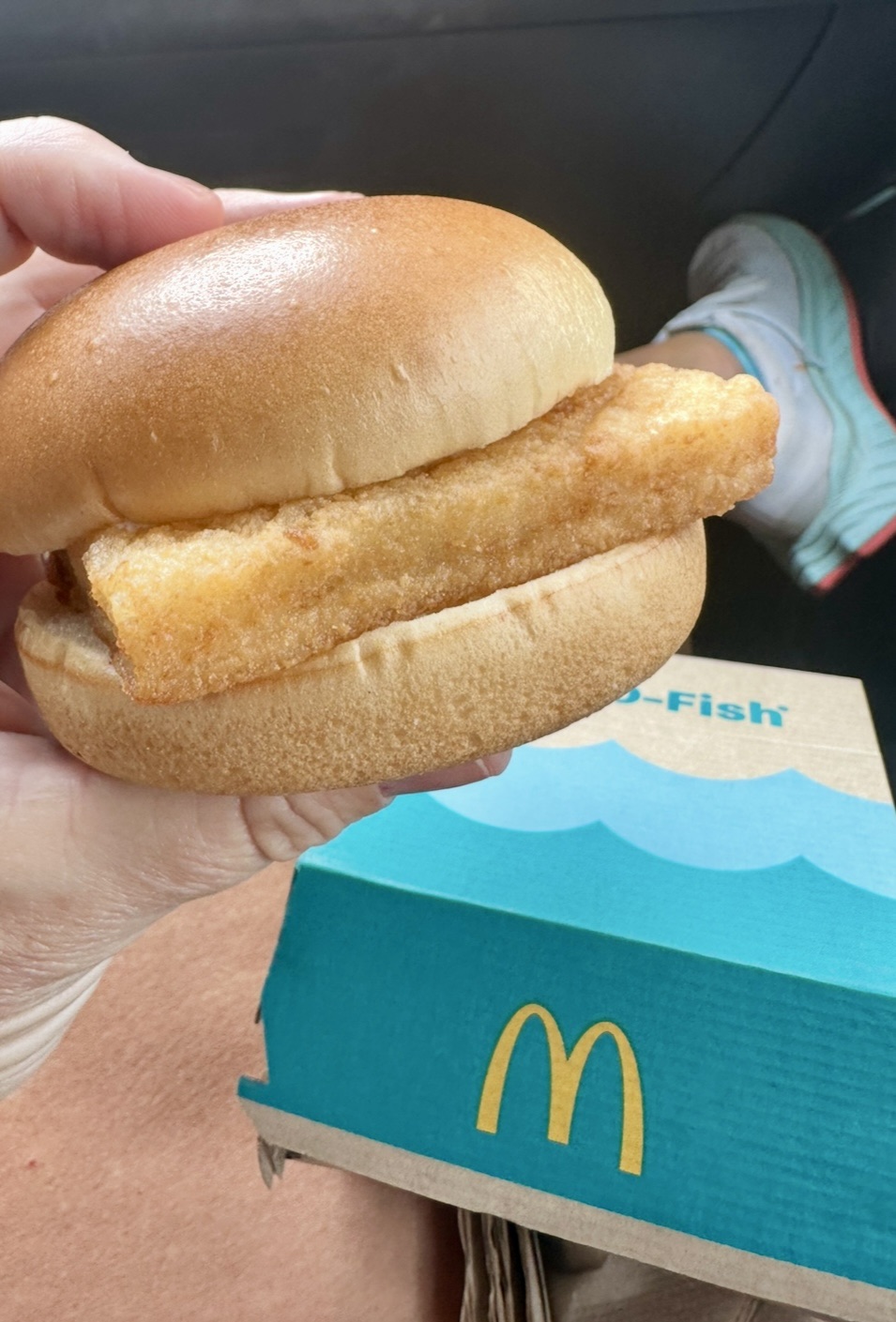
A few years ago (when I was almost exclusively writing about the seafood industry) I wrote a story about their Filet-O-Fish—specifically, about the organization’s commitment to sustainability and America’s workforce. The group had just developed a card game for kids, “Reel It In!” to teach children about sustainable fishing practices and the health of our oceans; they were promoting their well-earned certification from the Marine Stewardship Council; and they’d switched their fish source from New Zealand to Alaska. Which means McDonald’s Filet-O-Fish is:
- Wild caught (there are no fish farms in Alaska so if you see “Alaska” to describe your seafood then you know it’s wild caught)
- Sustainably sourced, harvested and monitored by the MSC blue ecolabel (no overfishing)
- Processed in Alaska, by folks who work in Alaska (not a foreign country)
And so, while I caught some flack from folks because I supported the fast food giant, I still stand by my support of McDonald’s Filet-O-Fish and the company’s commitment to sustainable fishing practices and to the economy of our 49th state. And it’s a choice I would make again—yes, there’s another plug about choice : )
In 1962, Ohio franchisee Lou Groen suggested adding a fish sandwich to the menu to help supplement declining sales during Lenten season. At the same time, founder Ray Kroc was considering trying a grilled pineapple with cheese “burger” so the two struck a deal and both were tested on a Friday—the winner would earn a permanent place on the menu. The rest is history.
So, if you’re out and about today, celebrate #NationalMcDonald’sDay and order a Filet-O-Fish and be thankful Mr. Kroc’s pineapple “burger” didn’t make the menu : )

 The flexitarian prescription
Leave a comment