The first time I had lobster I was in Palm Springs on a college spring break. Yea, yea … I know … most college spring breaks consist of cold pizza, beer, nachos and maybe some late-night cheese fries. What can I say, I did things a little differently than most. Anyway, a bunch of us were out to dinner when someone asked if I liked lobster. To which I said something like, “Don’t know. I’ve never had it.” I’m sure I’d been to places that had it, but I usually ordered crab or some other seafood. I remember my friend telling me it tasted like crab, so I ordered it. And while it might be similar, it is most certainly not “like” crab. It’s richer. Thicker. Not as sweet. And has, I think, a rougher texture. But it’s delicious, none the same.
How did the cockroach of the ocean became a delicacy?
It’s hard to believe, but not all that long ago lobster was food fit not for the wealthy but for those with hardly a nickel to spare. Back when New England was but a mere colony, lobster would wash up on the shore in droves causing some to consider it trash food. And it was so abundant that people turned their noses up at it and used it to feed their servants—not their dinner party guests. In his 1876 book, The Emigrant and Sportsman in Canada: Some Experiences of An Old Country Settler, John J. Rowan wrote that “… lobster shells about a house are looked upon as signs of poverty and degradation.”
Years later, although some Americans were starting to actually like the taste of lobster, it still wasn’t a delicacy by any means—in fact, it was one of the few proteins not rationed during WWII, if you can believe that. So why the change? There’re many things that contributed to the rise of the “ocean cockroach” one being, as simple as it may sound, learning to cook the meat properly—which, as it turns out, is pretty easy.
Maine lobster season is year-round.
A lot of people are squeamish about cooking whole lobster at home—hey, I get it. But nonetheless, lobster is delicious and given the opportunity to have it at home (for a much lower price than you’ll get in restaurants) I’ll take it. But before you head down the live lobster path, try your hand at cooking cold-water tails first. Easy peasy! Here’s how:
How to Cook Cold-water Lobster Tails
PREP TIME: 25 minutes | COOK TIME: 15 minutes
- Maine lobster tails 8-10 ounces each (this is a pretty typical size)
- 2 TBS parsley, chopped
- 1 TBS lemon juice
- 1 TBS garlic, minced
- 1/2 tsp paprika
- 1 stick butter
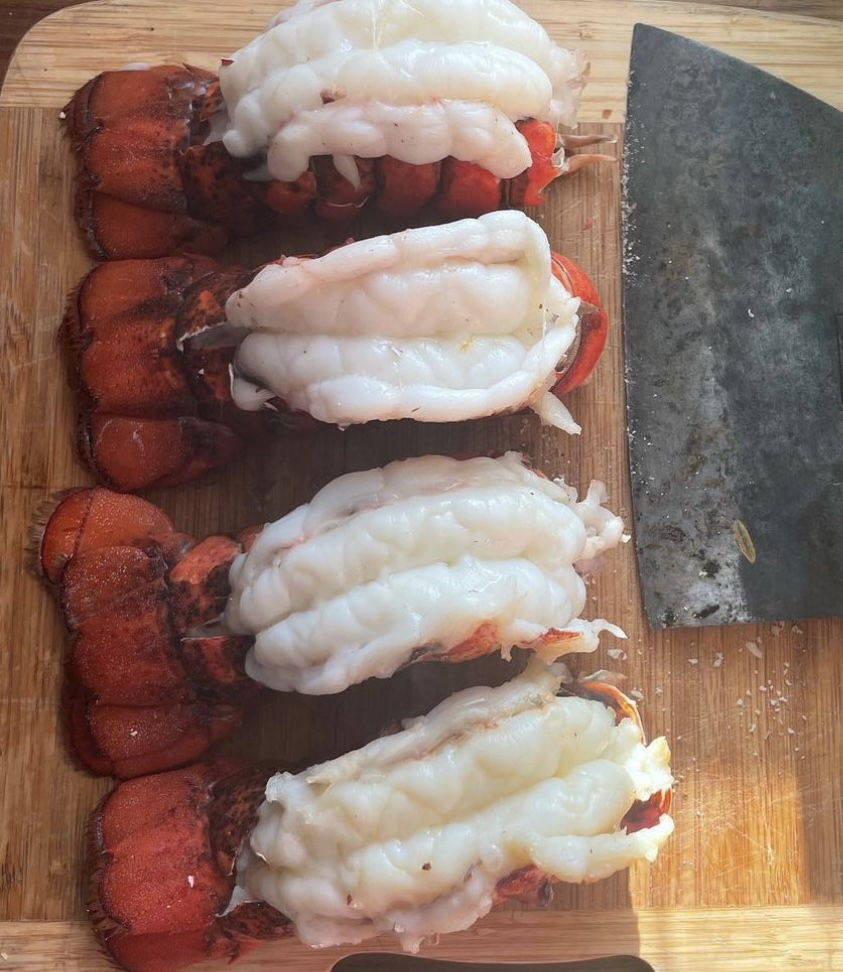
Melt 1/2 stick of butter and mix with parsley, lemon, garlic, and paprika. Set aside. Carefully, pick up the lobster tail and use sharp kitchen sheers to cut along the backside of the tail to allow the meat to separate. Place on baking sheet and baste with melted butter. Broil in oven for 5-10 minutes (for most store-bought tails) but, if you’re lucky enough to have a 20-ounce tail, it will take 12-13 minutes tops.
Serve with clarified butter for dipping: melt the rest of the butter in microwave so it separates. Spoon the white film off the top. The remaining gold liquid is your clarified butter. Dish up and enjoy.
TIP: Keep the shells and freeze them … then, when you want to make a seafood stock or a sauce for a seafood pasta, sauté them in a little butter and white wine
Thoughts? Have you ever cooked lobster at home?


 The flexitarian prescription
Leave a comment