Everyone eats. And we are what we eat—or so the saying goes. Of course not literally. I mean I know people who love bananas, but I have yet to see a human turn into a walking, talking banana. Still, the old adage is true. At least in theory.
If you eat nutrient-rich whole foods, your body and mind is relatively well-fueled, healthy, strong and full of energy. If you eat dull, insalubrious and unhealthy foods, you’re more likely to be lethargic and lackluster. But knowing the benefits of eating well doesn’t always provide enough motivation to do so, especially for today’s youth, athlete or not. And while proper nutrition is important for everyone—no matter age or activity level—it is especially crucial for young athletes.
Parents play a key position
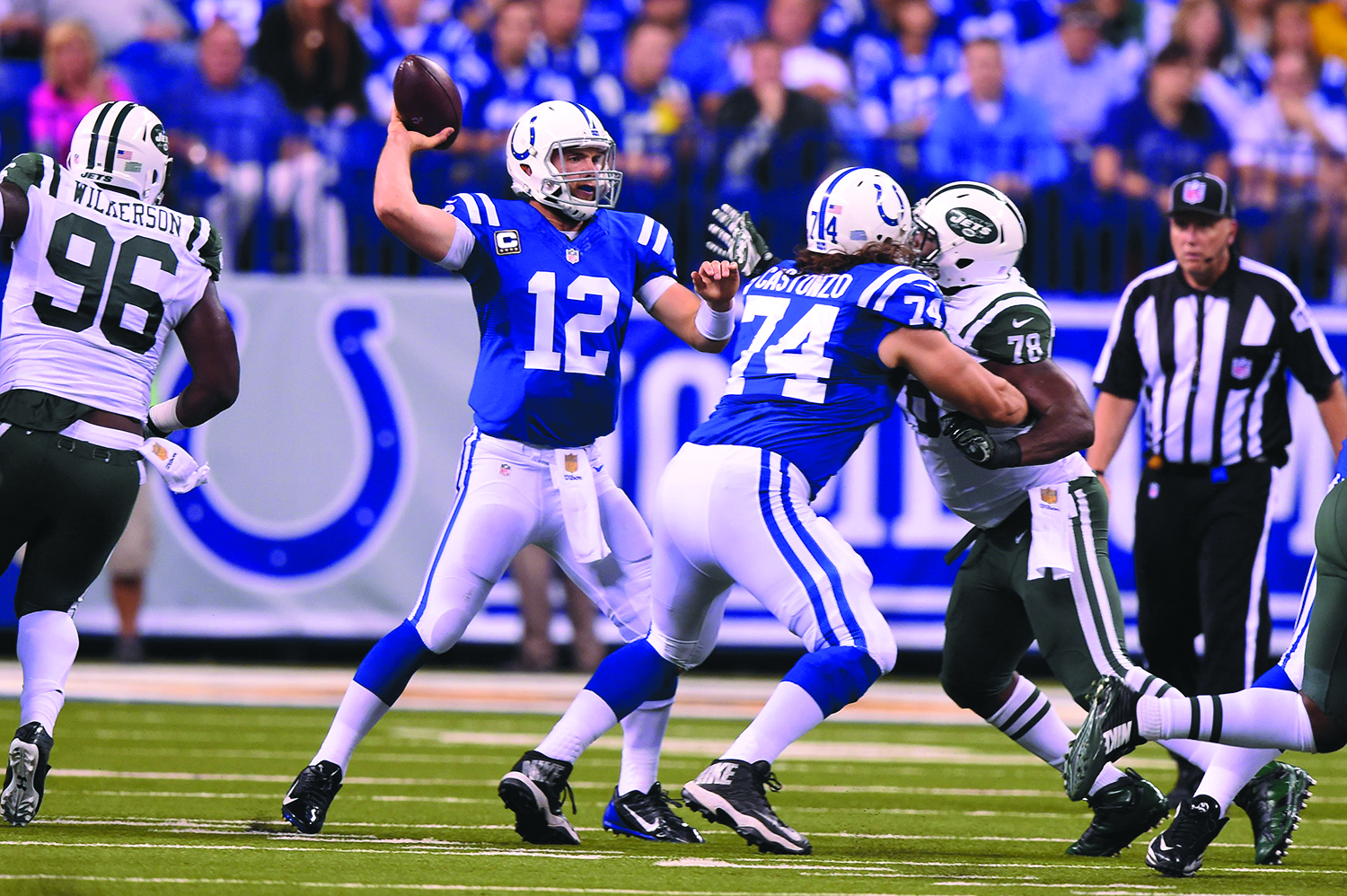
“Food,” he says, “can give you an advantage or disadvantage. I know when I’ve had a bad meal and how it makes me feel the next day.” But although Luck ate well as a child, it wasn’t until college that he started to become conscious of the types of foods he ate and the repercussions.
“We never talked about nutrition,” he says of his childhood days, partly spent in England and Germany. “Growing up in Europe we ate fewer processed foods, and I was fortunate to have my mom, even subconsciously, put good food on the table.” He and his siblings always ate a good breakfast, had normal paper-bag lunches and ate together as a family whenever possible. Of course by the time he reached high school, eating together became more difficult with he and his siblings involved in different activities—but even so, they still ate wholesome, nutritious meals even if they weren’t always at the same time.
What about breakfast?
Luck’s teammate, offensive tackle Anthony Castonzo, grew up in a family where good, wholesome food—albeit even inadvertently—was almost always on the table.
“Mom did a ton of cooking,” says Castonzo of his childhood. “My parents owned a restaurant so we were accustomed to eating a ton of different things … crab legs, steak, pasta … and we had salad with every dinner and lunch.”
And like Luck, Castonzo always did, and always does, eat a healthy breakfast. Breakfasts that at times have consisted of a dozen hard-boiled eggs: six whole and six whites only.
“As a junior (in high school) I was 6-foot-6, 195 pounds,” says the now 6-foot-7, 311-pound offensive lineman who played both basketball and football in high school, but eventually stopped playing basketball because he’d lose too much weight. “I knew I wanted to play sports in college and knew football was my best shot, so I stopped playing basketball.”
Once Castonzo arrived at Boston College, he said he knew he needed to gain weight to be effective in his position on the field, but he also knew he needed to increase muscle mass—not fat.
“I was very serious about nutrition,” he said. “You lose mobility if you gain fat.”
So Castonzo—although he had guidance and good direction from the athletic department’s strength and conditioning coaches—did his own research and learned what foods to eat, and which ones to avoid.
“I was a biochemistry major … I took things I learned in school and formulated a plan. I knew what was good and what wasn’t and learned what I could eat,” he said, adding the most important thing a young athlete can do is to research and understand what they’re eating.
Improve performance and establish lifelong eating habits
Both Luck and Castonzo have been fortunate to have their hard work and athletic prowess award them the opportunity to play a sport they love and turn it into a career—but becoming a professional athlete, or even a collegiate athlete, isn’t a reality for most kids. Which is why it’s so vital that exercise combined with healthy lifelong eating habits be a priority regardless of their future in organized athletics. Through his partnership with Riley Children’s Health and the Change the Play program Luck encourages young people to make good choices about nutrition and exercise—choices that will help shape them into healthy adults.
The program challenges youth to “focus on fun ways to learn about exercise and healthy eating, both at school and at home,” says Luck. And fun is key.
“If it’s not fun, a kid’s not going to do it.” But, he says, that goes for young athletes as well—they too should enjoy their activities and have fun while playing whatever sport they’re involved in while maintaining balance.
“As an athlete,” says Luck, “you need to look for things that make you better, and moderation is important,” especially, he adds, when making food choices. And it’s that “looking for things that make you better” that can make all the difference in a young athlete’s performance, which is why Castonzo’s advice when it comes to nutrition is equally simple.
“Educate yourself,” he says. “Find out what’s in the food and how it affects your body.
“In the off season, I used to watch some of the young guys at the IMG Academy who were there training for the Combine. Some were so diligent with their diet,” he says. “Others, not so much.”
And of the guys who were indolent when it came to their food choices. Castonzo says no matter how good they were on the field, he guarantees none of them are still in the NFL.
Originally published 2017 | PHOTO: Courtesy Indianapolis Colts
“Fueling your body wrong will catch up to you,” he says. Quoting one of the Colts’ nutritionists he recommends everyone remember these seven words: “You can’t out train a bad diet.”

Leave a Reply